A web design firm, a creative agency and a software vendor walk into a client’s office. The client asks, “How often should we redesign our website?” The agency replies “every two years.” The software guy says “every five years” The web designer says…
This isn’t a joke. I was actually in this meeting. There were eight people from four companies in the room. My answer at the time was four years. My standard answer has always been 3-5 years, depending on the industry. But that’s a big range, and is dependent on quite a few factors.
Since then, we’ve done some research to really answer the question…
What is the average lifespan of a website?
We looked at 50 of the top marketing websites in the Internet Archive to see the interval at which they redesigned.
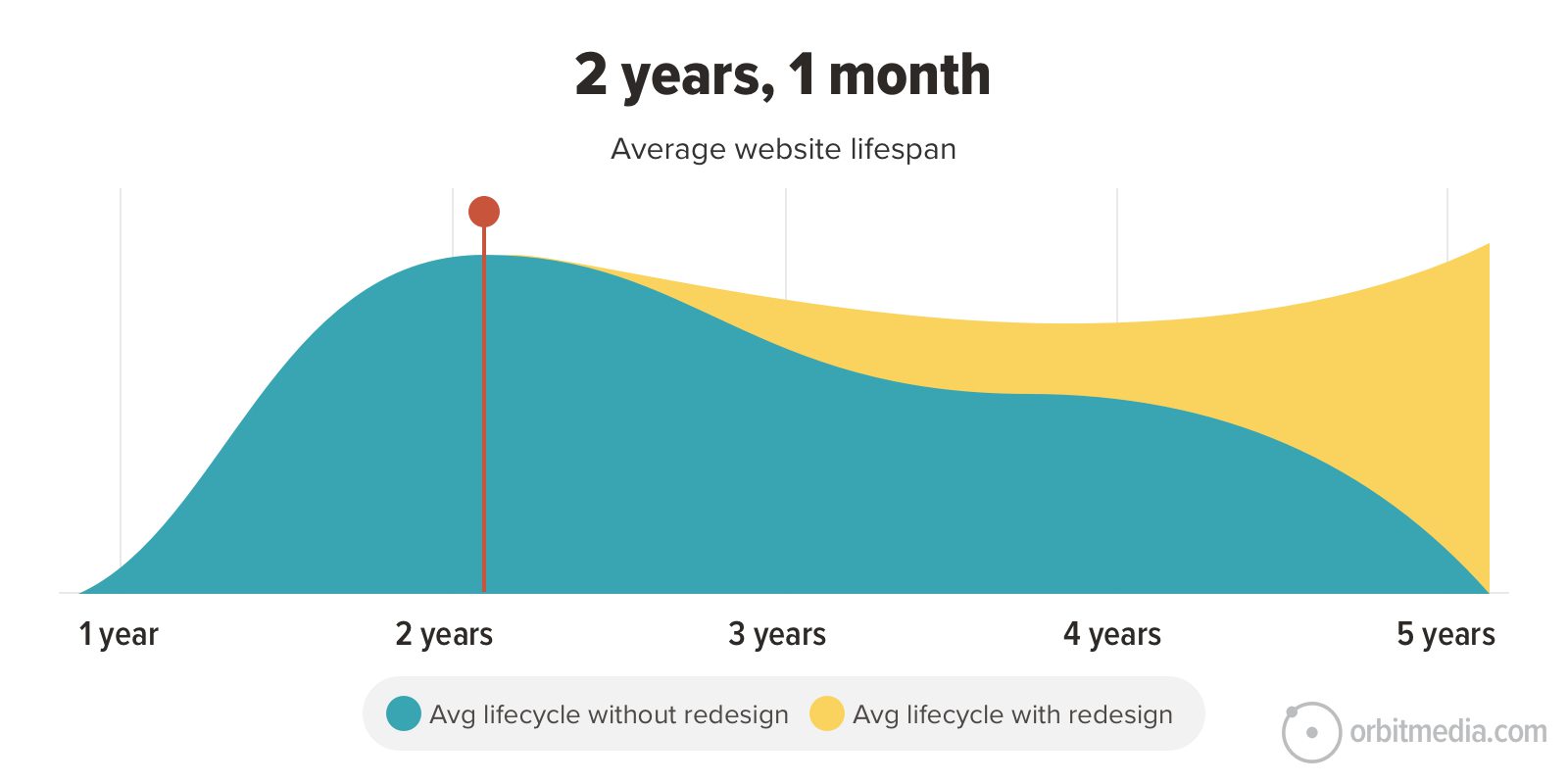
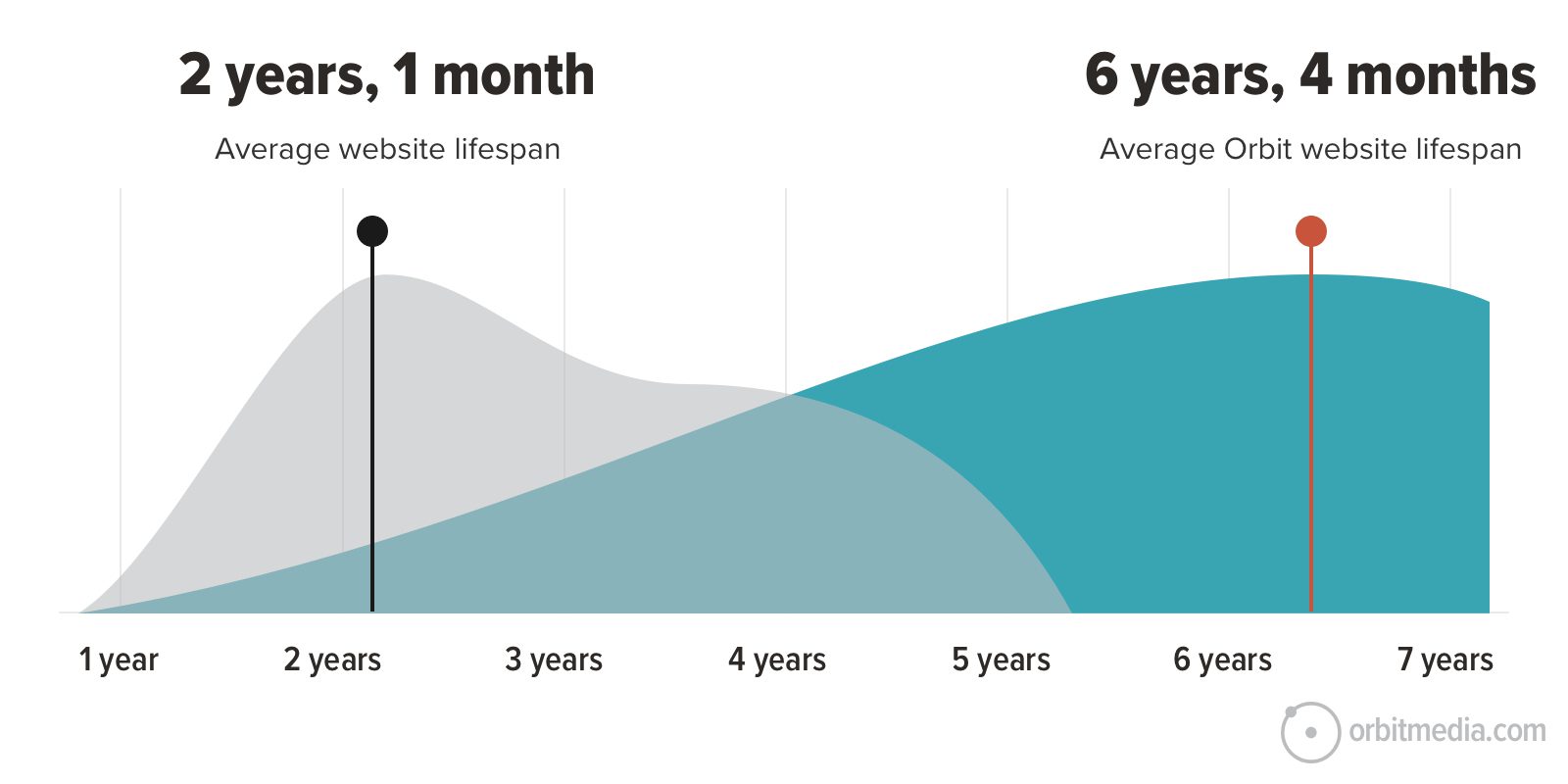
The average website lifespan for top marketing brands is 2 years and 1 month.
That seems short, but these were some of the top brands in digital and companies with big budgets. Similarly, a Databox study on website age surveyed 145 small to medium companies and found that 49% of those surveyed had completely redesigned their websites within the past two years.
So for another datapoint, we examined the websites of 78 of our own clients and noted the time between major redesigns for each site.
The average website lifespan for Orbit clients is 6 years and 4 months.
You’re probably thinking that 6 years seems like a long time, and you’re right! So, why is it that some businesses can go for four, five or six years between website redesigns, while others continue to redesign every two years?
The short answer? It’s complicated for a few reasons:
- The industry you are in will have a huge impact on the “norm” for website redesigns. Companies in highly competitive marketing and design fields are more likely to redesign more frequently.
- Other factors, including visitor expectations, web changes, updated brand guidelines and more, will all play a role in your website’s longevity.
- When done correctly, a high-quality redesign can last you 5+ years, as opposed to lower-quality work. This is part of the reason finding a company that specializes in websites (SEO, CRO, web design and web development) is so important.
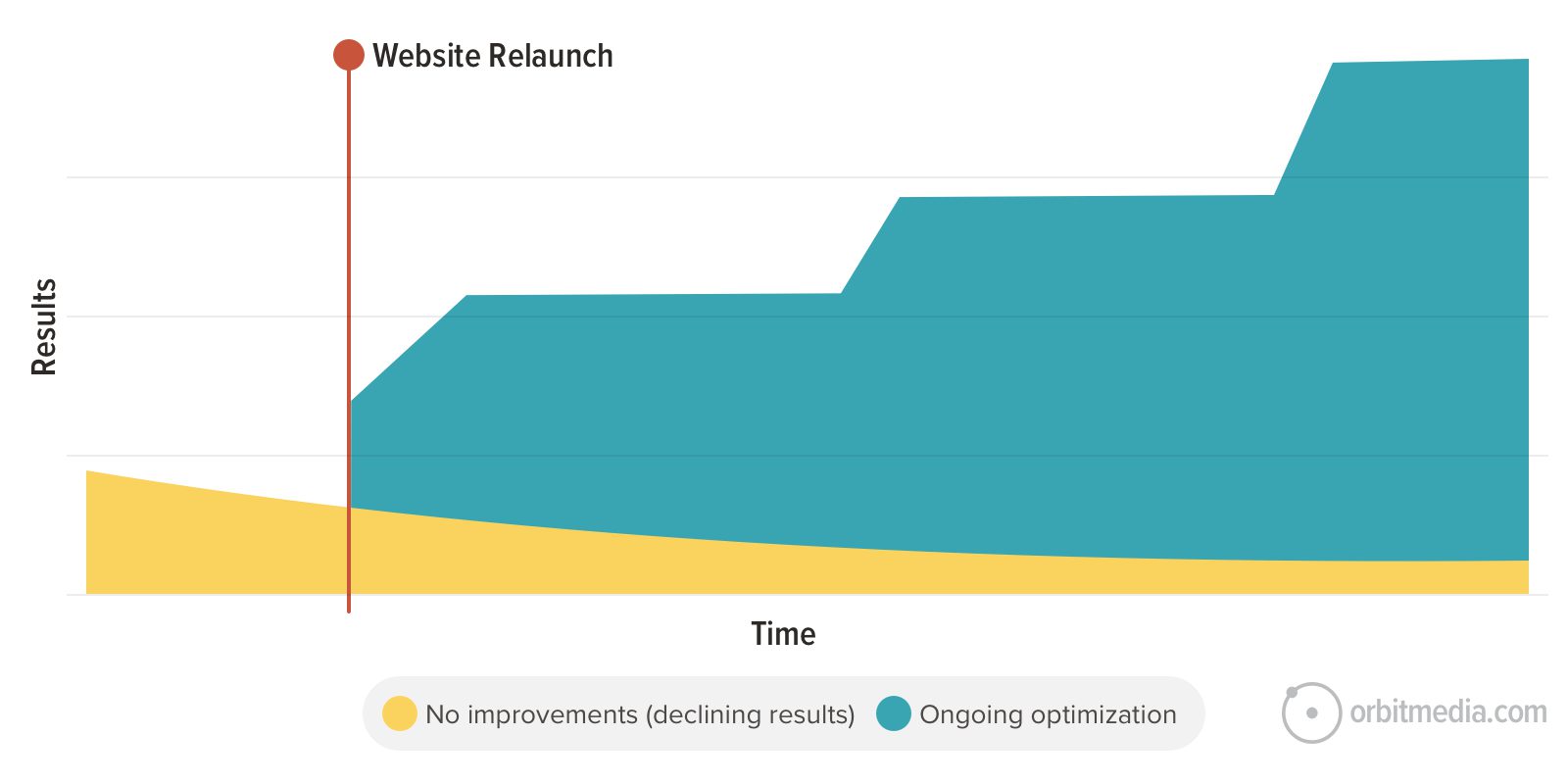
Keep a website live past its prime and results will begin to decline.
Let’s take a detailed look at some of the top factors that influence website lifespan.
10 website life expectancy factors
What can be said with certainty is that all websites need to be redesigned eventually. It is a must for keeping up with competitors in your industry and adjusting to the changing needs and standards of users and the web.
There are quite a few reasons that websites get redesigned. The Orbit team has redesigned 1000+ websites. Here’s what clients tell us the reasons are.
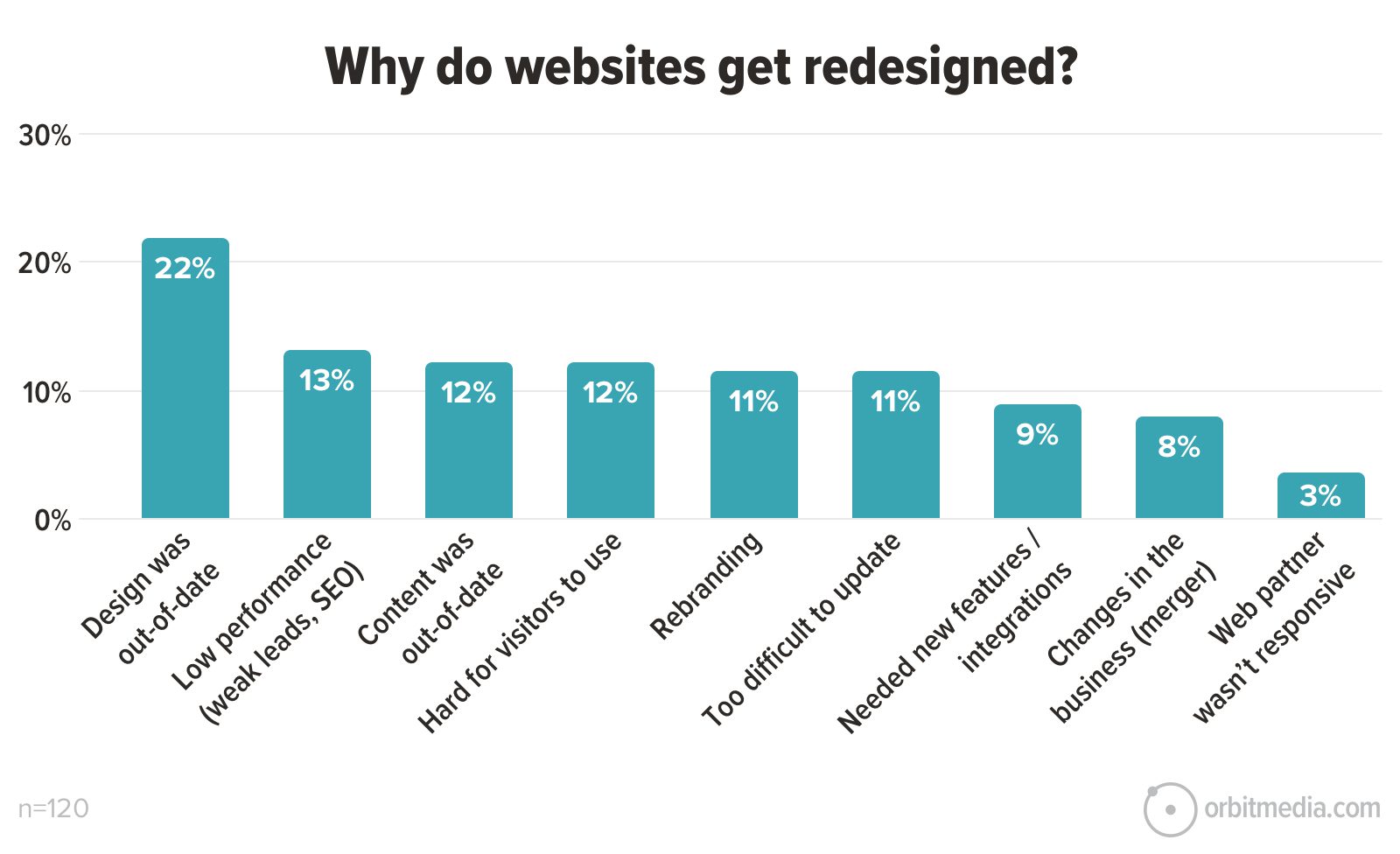
When and why should you redesign your website? To help answer these questions, ask yourself the following:
1. Has the main message of my business evolved?
Your website should be an accurate reflection of your business. If you’ve made important changes to your messaging, branding and offerings, you are definitely in need of an updated website.
2. Has my content strategy changed?
Are you doing more publishing, hosting events or otherwise changing the way you publish and create content? Your site should reflect that, and be redesigned with new search engine optimization (SEO) and conversion opportunities in mind.
3. Has my industry evolved? Are people in my business talking about things differently these days?
Your business and industry can be shaped by many factors– new technology, changing best practices, current events, market trends, etc. Your site can be a strong reflection of your position in the marketplace.
 |
Peter Caputa, CEO of Databox“Redesigning websites is like discussing politics on social media. Every jerk has an opinion and wants to have the last word. I don’t greenlight a redesign process unless there are other reasons, like launching a new product, attacking a new market, or changing the positioning of the company. Just because people are bored with the design or copy is not a good enough reason to do a redesign. Companies that are bored with their messaging, should run A/B tests and let their audience vote with their clicks. Failing performance isn’t either. Performance is usually because companies aren’t spending enough time on an ongoing basis making the changes necessary to increase search traffic and improve conversion paths. “ |
4. Am I in a design- or technology-related industry?
The industry you are in plays a huge factor in website longevity. Times change faster for businesses in the digital marketing, advertising, design and tech industries, and so do websites. Being the slowest to redesign your website in your vertical puts you at a disadvantage.
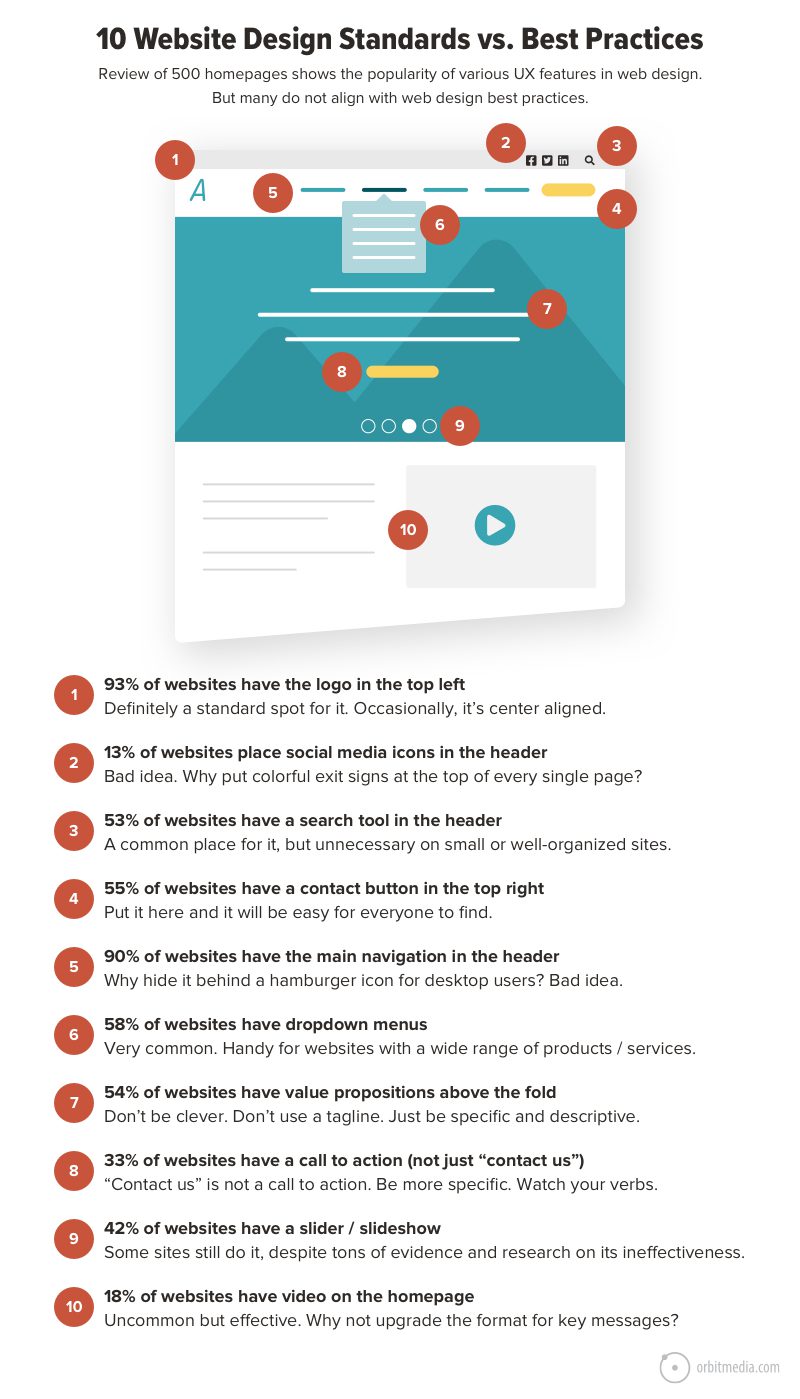
5. Is my site keeping up with design trends? (Prominent calls to action, single-column layout, imagery and videos, scannable content, etc.)
A website that isn’t up-to-date with the current web design trends and best practices can hurt your credibility and might turn users away, compared to more modern, updated sites.
6. Is my site usable and visually appealing on phones and tablets?
There has been a huge uptick in the amount of mobile and tablet web users. If your last redesign was 6 years ago, it’s possible that most of your visitors are using completely different devices today.
7. Is my site hard to update?
Content management systems have improved. These days, it should be fast, free and easy to make most changes to the content on our websites.
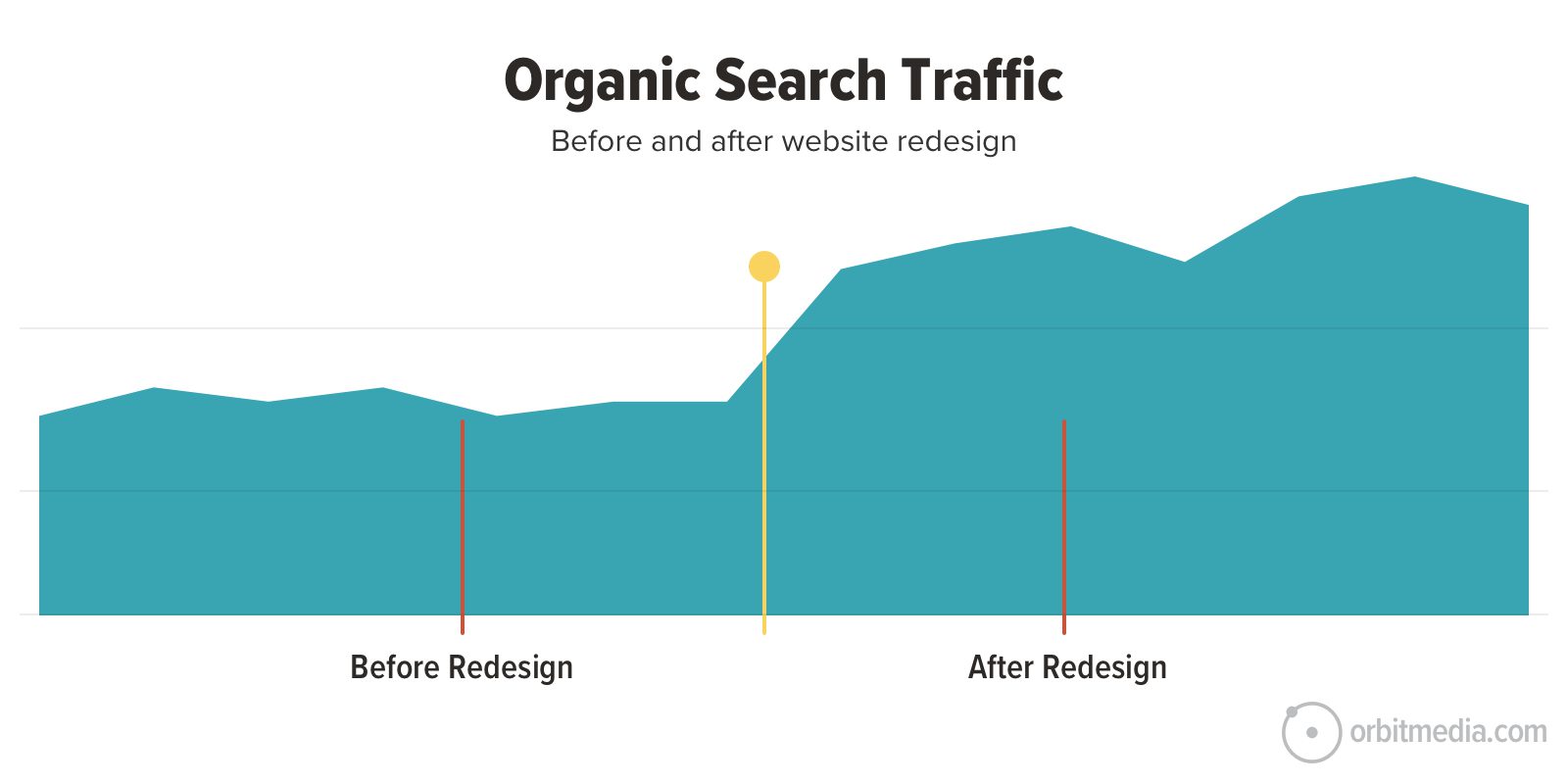
8. Have my rankings and search traffic declined?
Unless you are actively promoting and optimizing content on your website, rankings tend to decline over time. A redesign can reverse the trend of declining search traffic through a new keyphrase-focused sitemap, with new pages targeting new phrases.
9. Is my conversion rate declining?
Visitors’ expectations keep increasing, so unless your website keeps improving, conversion rates tend to decline. A redesign can reverse the aging process through a new, conversion-optimized design that better resonates with your users.
10. Have my competitors recently redesigned?
This is the big question: What are your competitors doing? Your site’s age is relative to your competitors. If other companies in your vertical have a more recently designed and launched site, they may be stealing the show, and potential leads.
So, what were your responses? If you have a lot of yeses, it’s likely your site is showing its age. A website redesign is an effective way to reset– so you can ensure your site is positioning you as a credible source in your industry and is truly reflective of who you are, what you do and where you’re going.
How to extend the lifespan of a website
Making frequent updates and optimizations to your website is one of the best ways to reverse or delay the aging process. Here are a few methods for refreshing your site using content, layout and design updates:
Refresh your content: Creating and adding new content such as refreshed copy, images, videos and blog posts can make a big difference. Not only can these assets be repurposed for a redesign down the road, but these can refresh your SEO strategy as well, potentially improving your rankings for various keyphrases.
Streamline your navigation: Do some research to find out what links people are visiting the list and the most from your primary and secondary navigation. Consider trimming your navigation by getting rid of the links users engage with the least. This can freshen up the look of your navigation and draw more attention to the pages that are driving engagement and conversions. Read our guide on website navigation best practices.
Update minor design elements: Make small tweaks to your type and color palette across your entire site. This can bring your site up to date with your brand, refresh the look and feel and may even give the illusion of a new website. Small changes can make a huge difference!
Layout enhancements: Think of this as a facelift– incorporating new layouts for key pages on your site, or even just your homepage, can make your site seem fresh for new visitors. Pinpoint some of your trouble spots, where your site is showing its age, to capitalize on more modern design trends.
Some pages that may need a “lift” include your highest traffic pages and top exit pages. According to the Databox report, about a quarter of surveyed companies made some layout updates to their site within the last year.
Keep in mind that the value of any change is relative to the cost. So, if you are planning on redesigning soon, don’t invest a lot of time and money into smaller tweaks and updates. See our guide for prioritizing website changes for more information.
The ROI of website redesigns
A great website supports your company in many ways:
- Search visibility: More people can find and learn about your company.
- Accessibility: More people can use your website efficiently.
- Profitability: More users engage and convert.
- Credibility: An updated, high-quality website helps gain users’ trust.
- Scalability: Your site can grow, expand and transition along with your business.
Designing a new site that touches on all of these factors can take a lot of time and effort– it’s something you want to get right. The good news is that a well-designed website will be effective for a longer period of time– and your website ROI will follow suit. At Orbit, we take great pride in designing websites that improve your SEO, CRO, and ROI for 5+ years.
 The bottom line
 The bottom line
When your business or your visitors change, your website ages. It’s old as soon as it’s out of sync with your business goals and isn’t getting you measurable results.
When this happens is hugely dependent on any site updates you’ve made, what industry you’re in, the quality of your last site redesign and any updates within your business.
My advice is to keep your site as young and fresh as possible with content, design and layout updates– but be ready to make the tough decision to redesign. And when you do, remember that a great website will produce results for 5 years or more, while a poorly designed site will need another redesign within 2 years or less.
Editor’s note: This content was originally written by Andy Crestodina, co-founder and CMO of Orbit Media, and updated by Mackenzie Pelletier, an SEO copywriter at Orbit Media.